Rapid prototyping and testing provided Keurig critical early feedback, uncovering insights that helped shape their future brewer. As a lead designer, I led the design and exploration of the interface and user flows for both the on-brewer and mobile app prototypes, working collaboratively with the cross-functional team.
My Role
Strategy, Interaction Design, Visual Design, Prototyping
Team Members
Strategist, UX/UI Designer, Project Manager.
External testing partners.
External hardware partners.
Timeframe
6 Months
The vision
The vision was to introduce a premium brewer to the market targeting tech savvy consumers who appreciate personalized experiences.
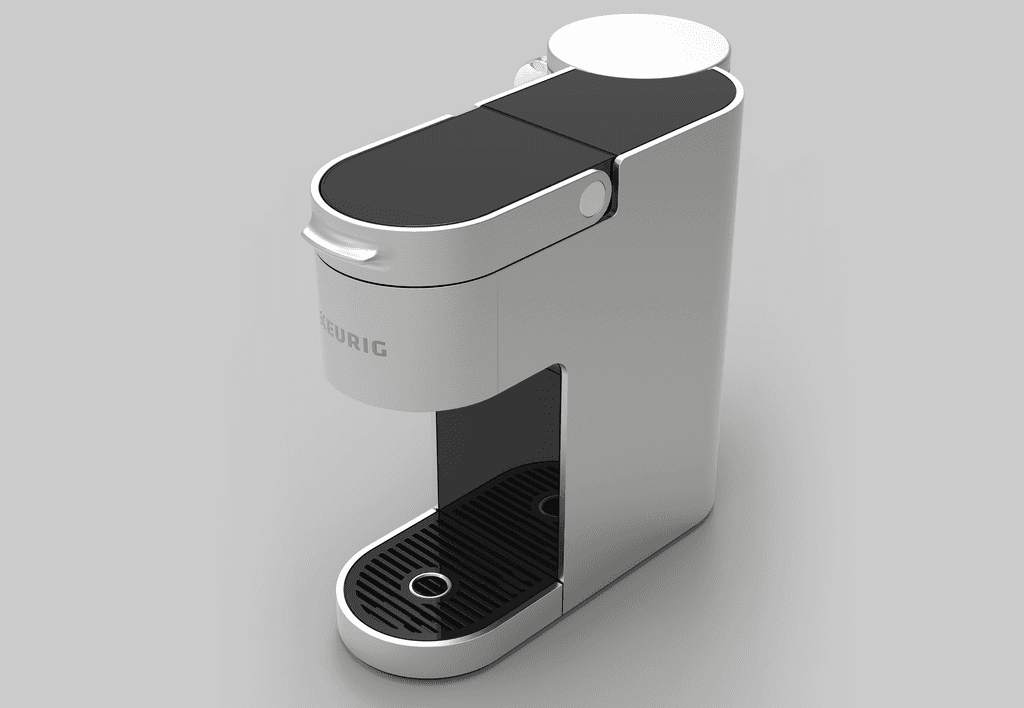
The proposed hardware was designed to include WiFi connectivity, a digital touch display, and pod identification technology.
Themes explored were focused around:
Brew Personalization
Adjustable settings for cup size, strength, and temperature, with the ability to save preferences.
Brew Optimization
Pod identification could enable an enhanced brand experience both visually and through recommended brew settings to optimize flavor consistency.
Mobile Control
Remote brewing and scheduling through a companion app, along with additional features for enhanced convenience.
Our Approach
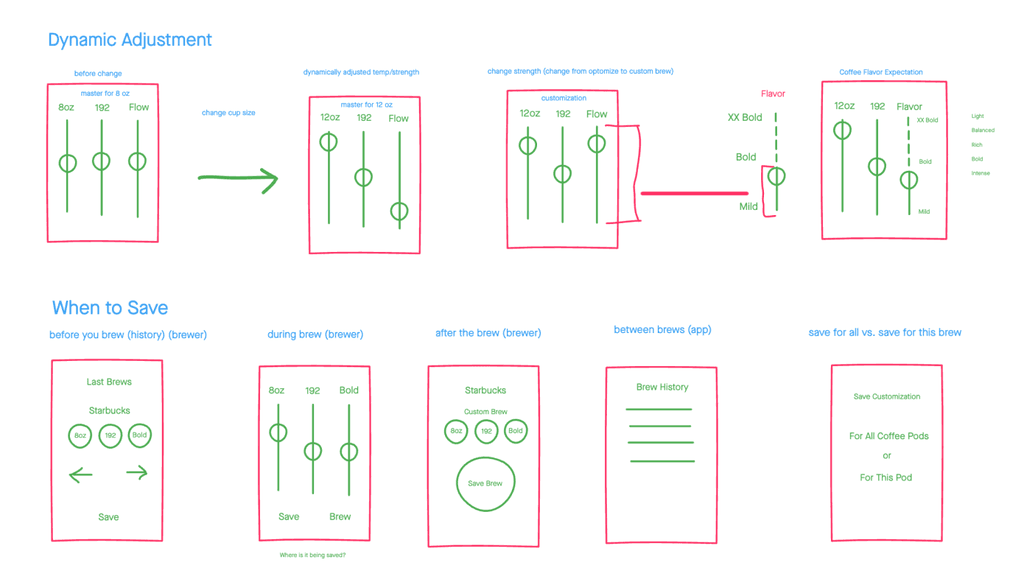
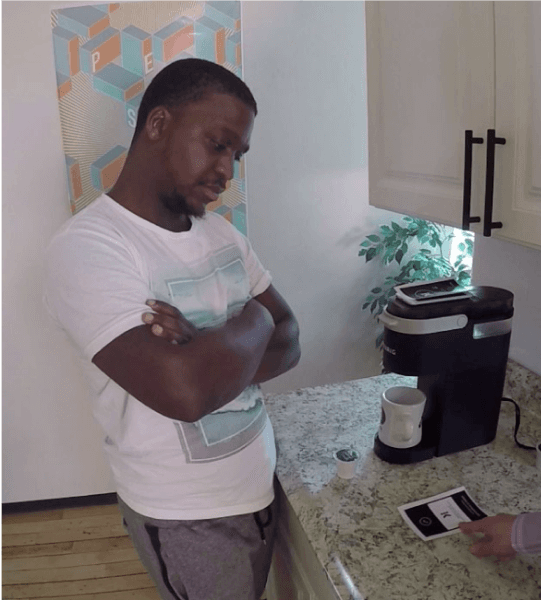
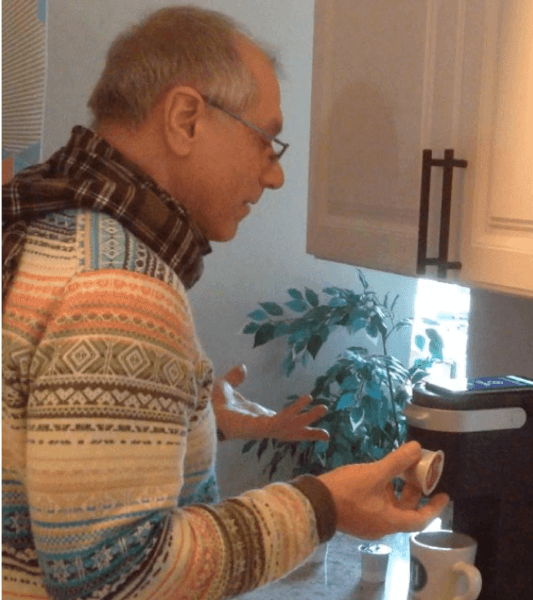
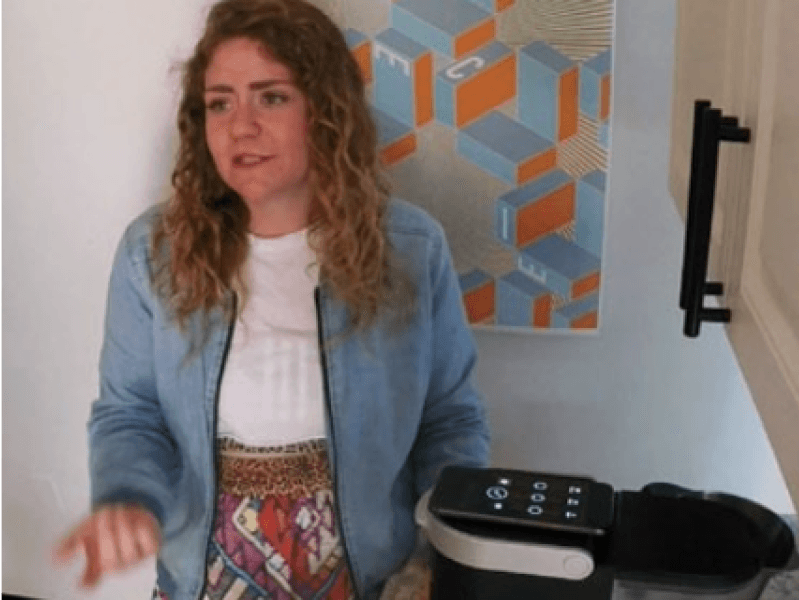
Each sprint focused on specific features, guided by “How might we…” questions. We started with high-level sketches to brainstorm ideas, then moved to interactive prototypes of varying fidelity to explore interactions and user flow. Prototypes and contextual inquiries were vetted with stakeholders and tested in-person with 6-8 participants during each sprint.
After each session, feedback was synthesized to determine if further iterations were needed. This user-centered, iterative approach enabled us to quickly explore concepts, uncover valuable insights and provide Keurig a clear path forward.

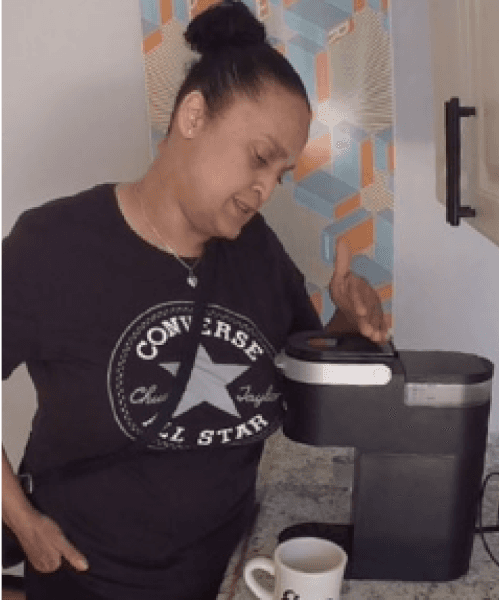

The result
Extensive testing provided Keurig with critical insights that shaped the product direction, addressing design elements that couldn’t be changed post-launch.
Through our research, we identified user preferences for physical buttons and an angled display over a flat, digital-only interface. These recommendations enhanced usability for under-counter use and required innovative hardware adjustments.
Our insights laid the groundwork for thoughtful innovation, offering a strong foundation that has the potential to inspire future iterations and advance connected convenience.
Outcomes:
Effectively collaborated with cross-functional teams.
Adapted to rapidly changing feedback and requirements.
Delivered actionable insights from extensive usability testing.
Influenced the product’s design direction and user experience.
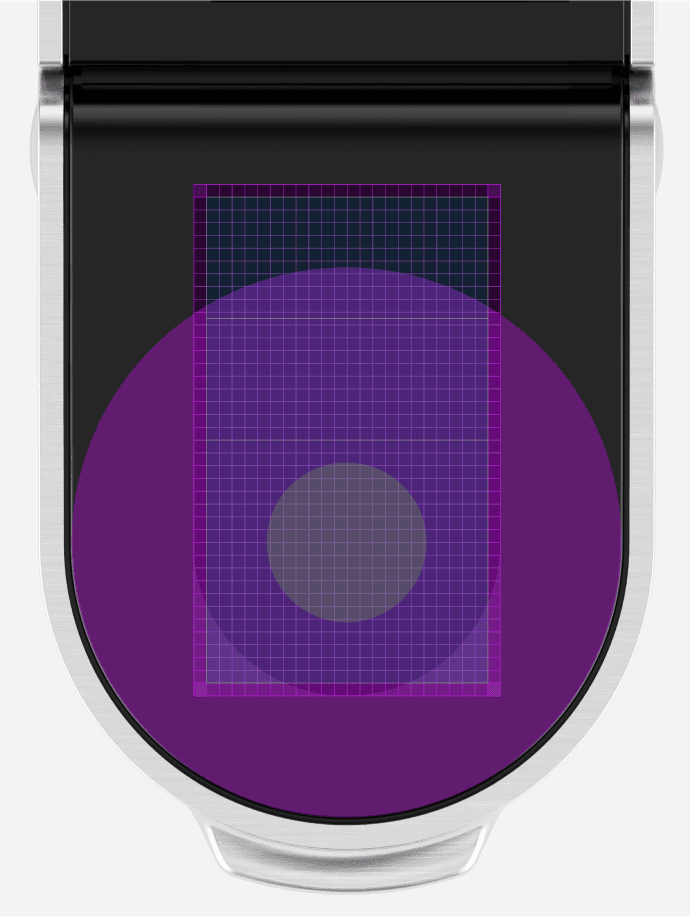
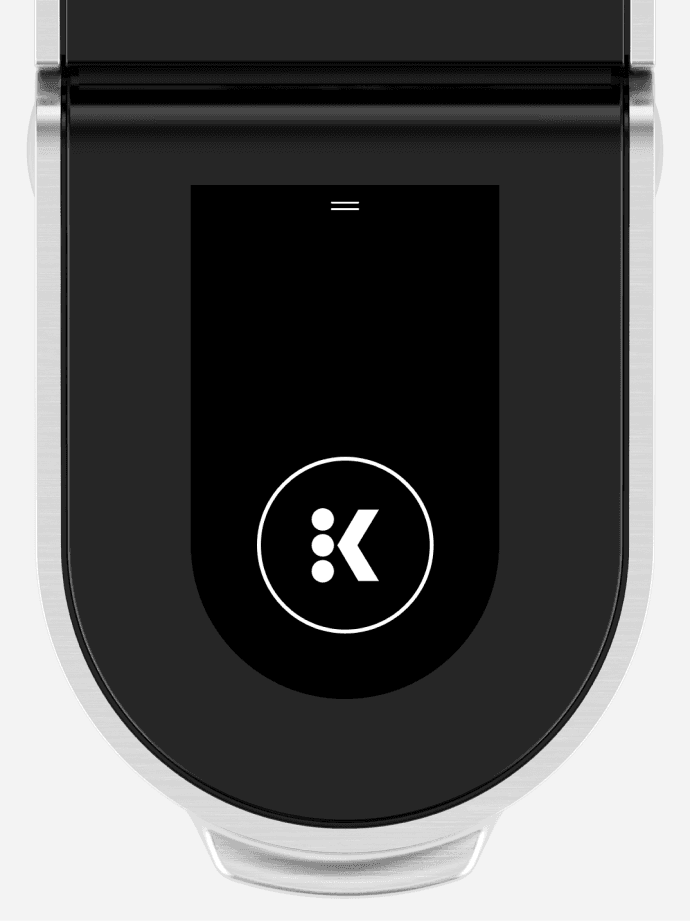
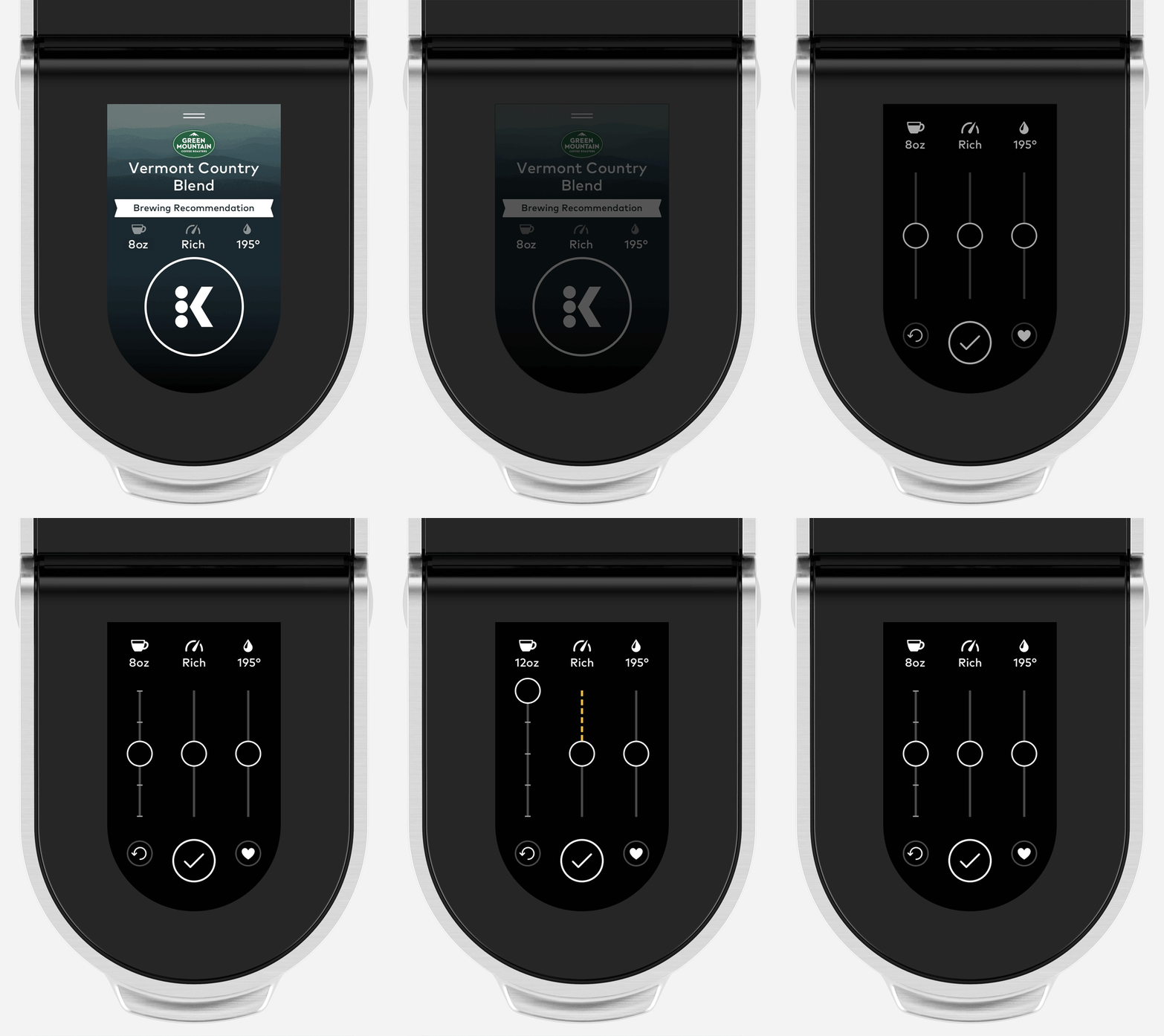
A grid system for the brewer's touch display ensured perfect alignment, allowing the circular brew button to sit above the inserted coffee pod. A small detail that made everything feel more cohesive.
With pod identification, brands had the opportunity to create a customized experience by providing recommended brew settings for their pods, ensuring consistency in flavor and brand experience. Here were a few representative examples of how we envisioned that coming to life.
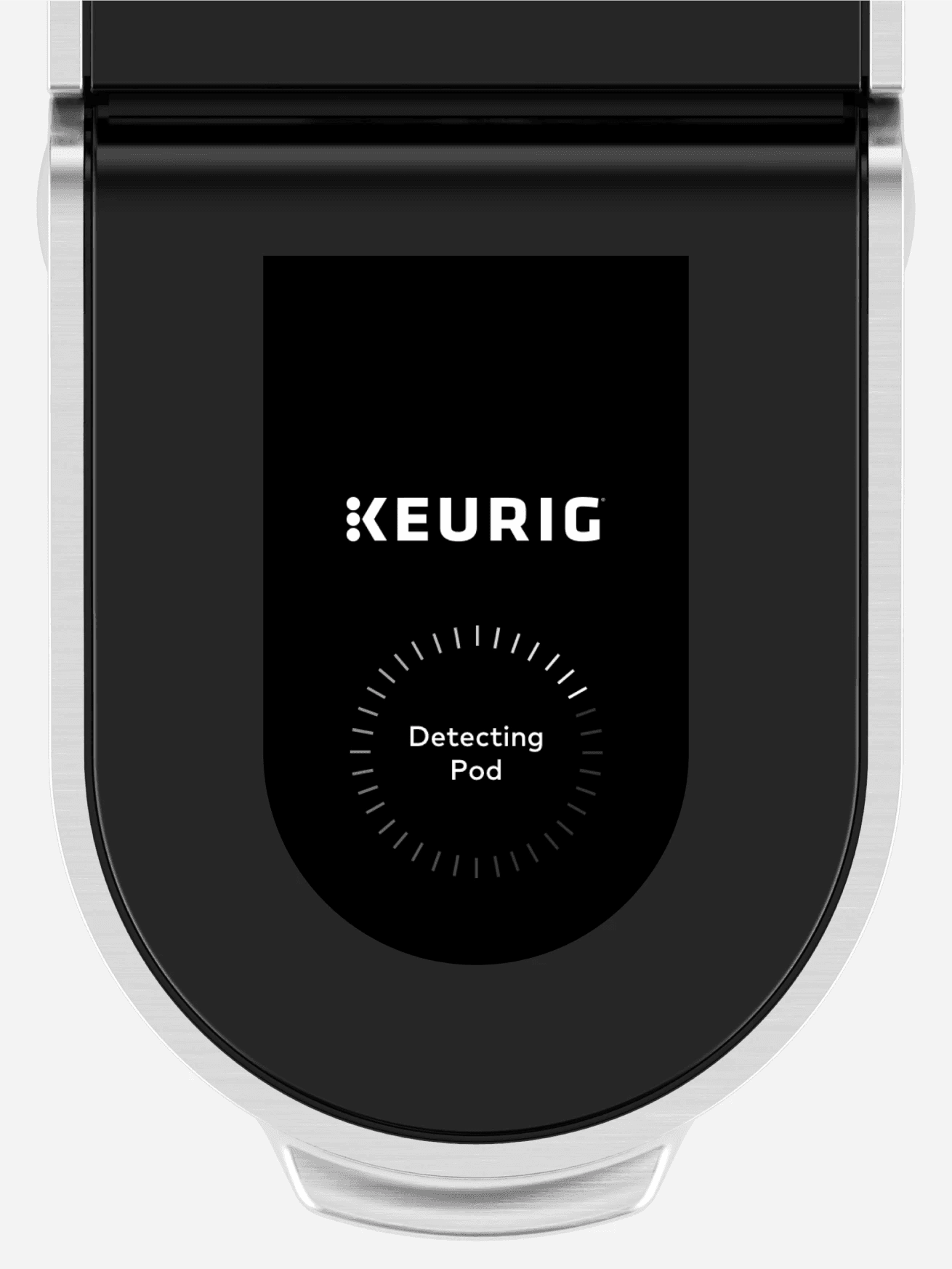
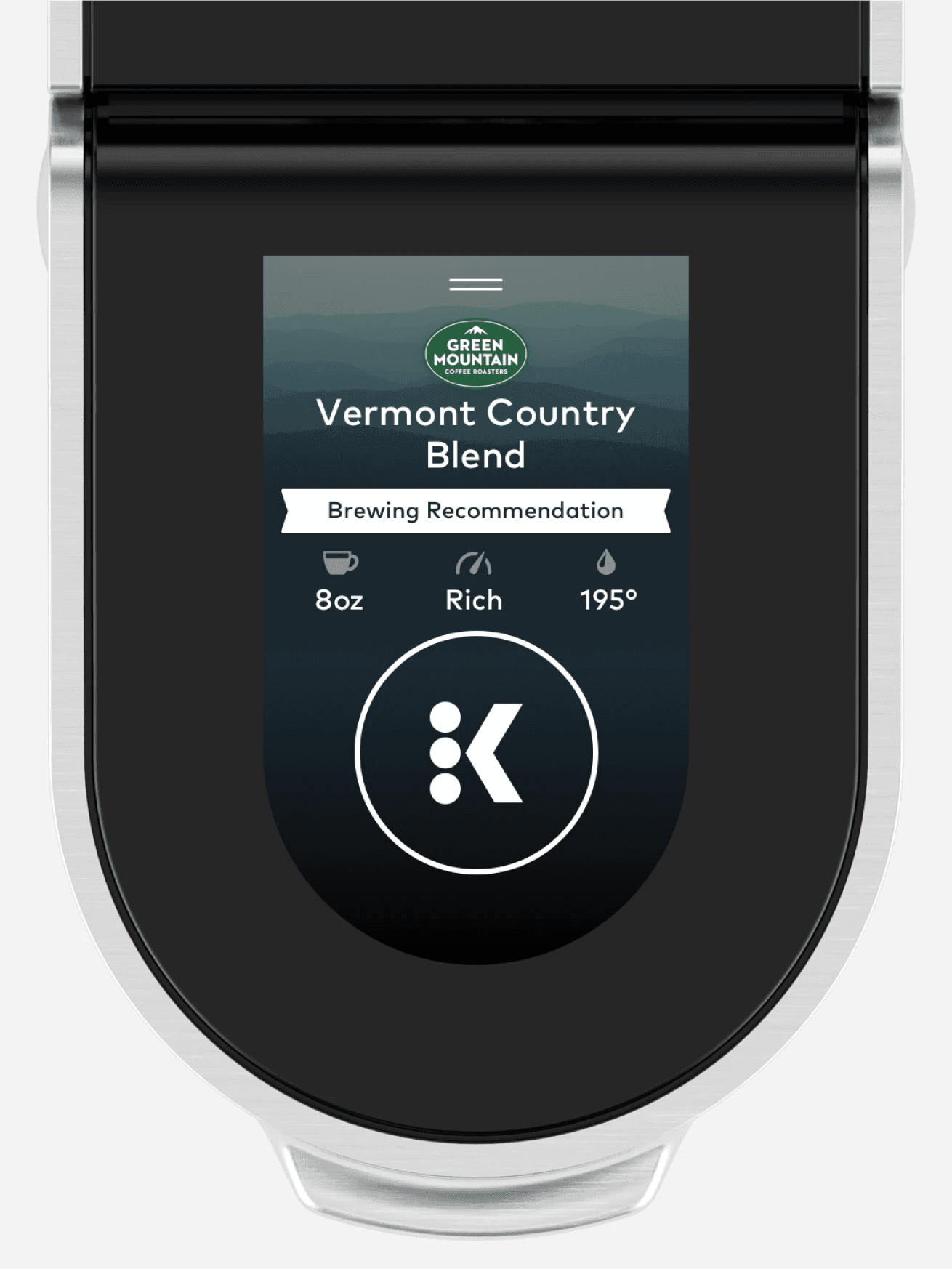
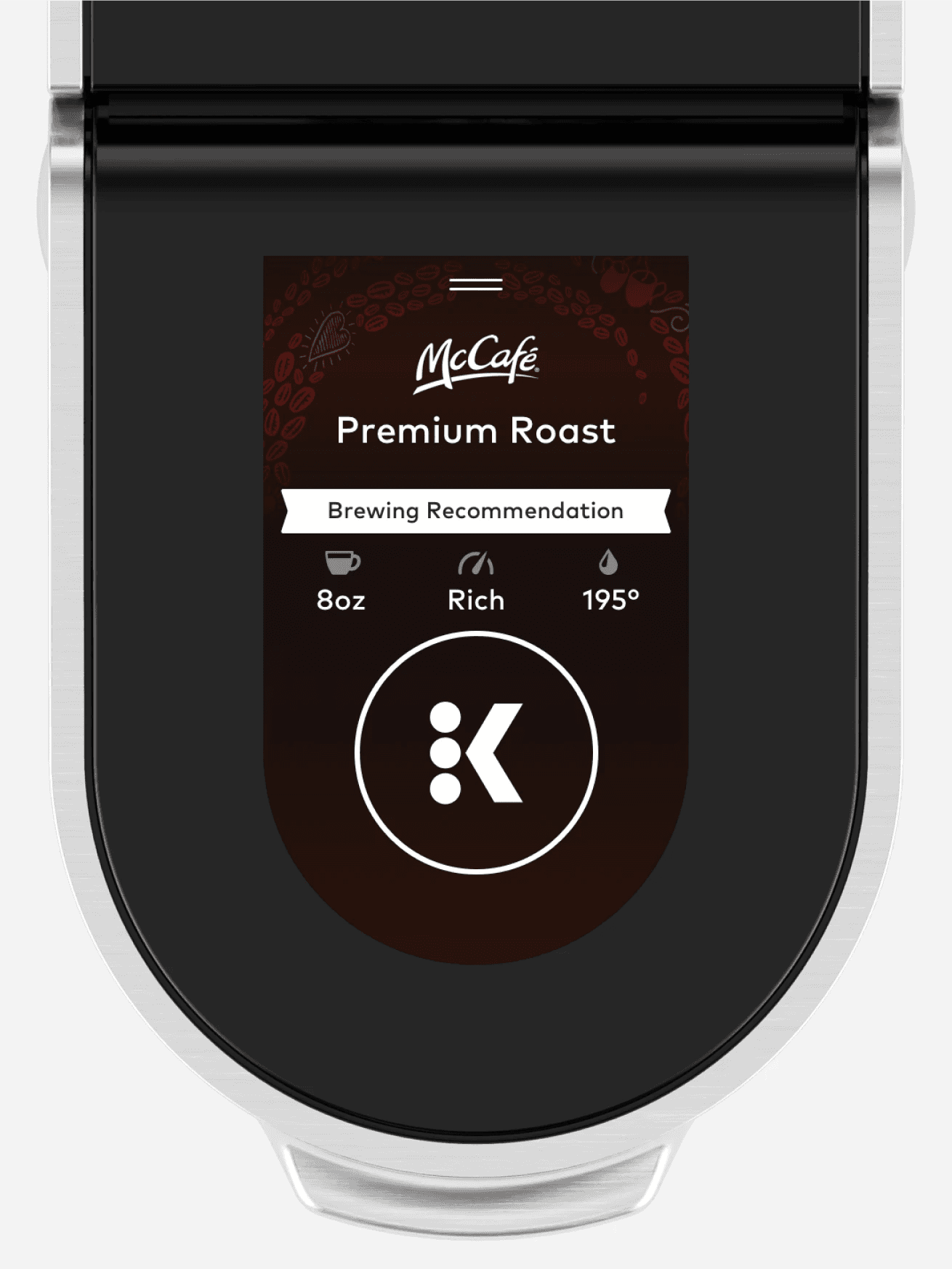
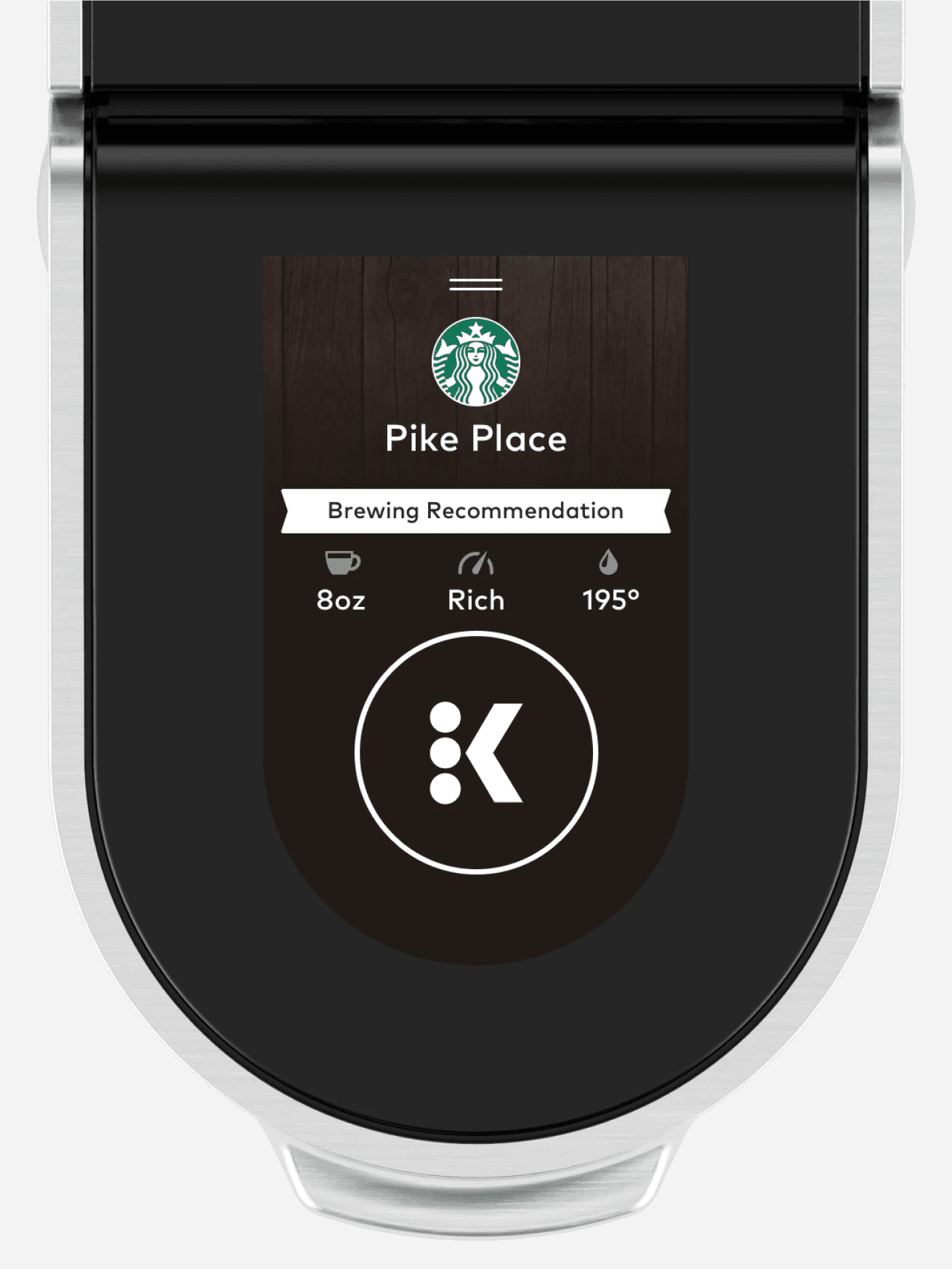
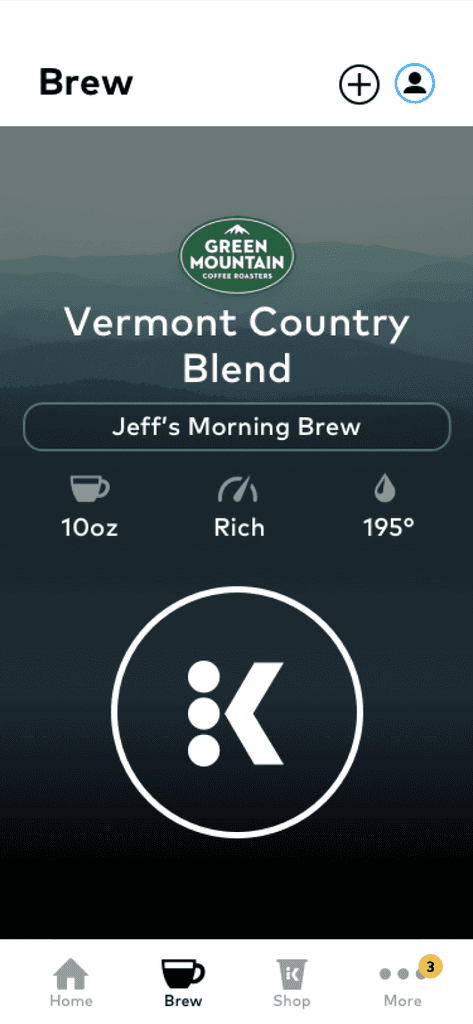
Brand-recommended brew settings, including cup size, strength, and temperature, were provided automatically and could be easily adjusted with a single tap.
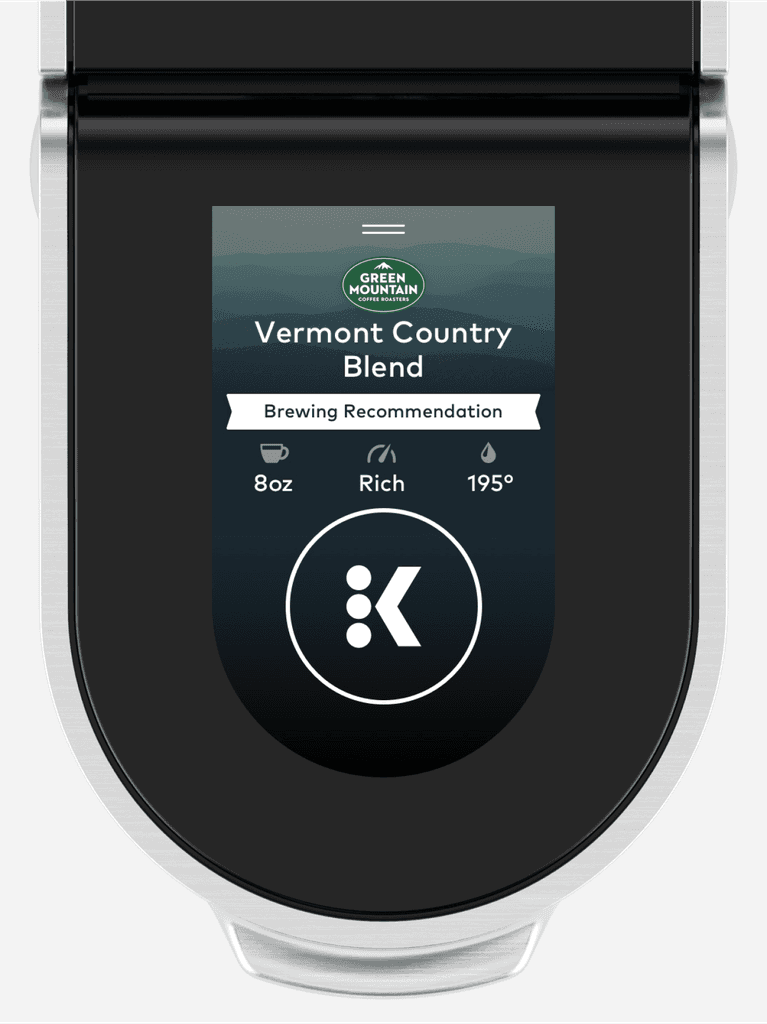
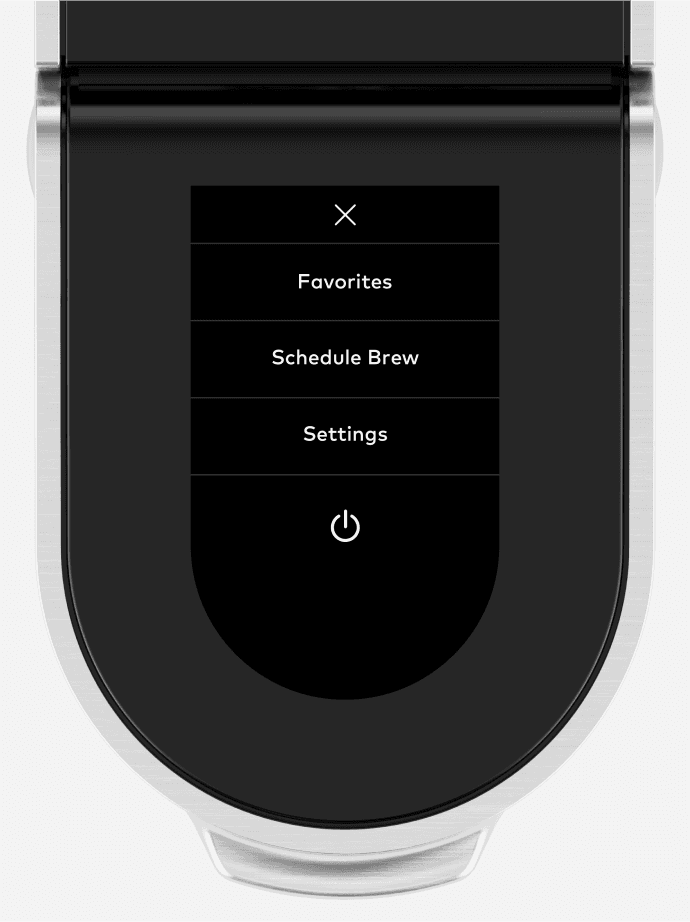
A pull down menu at the top kept managing favorites and advanced features organized and out of the way.
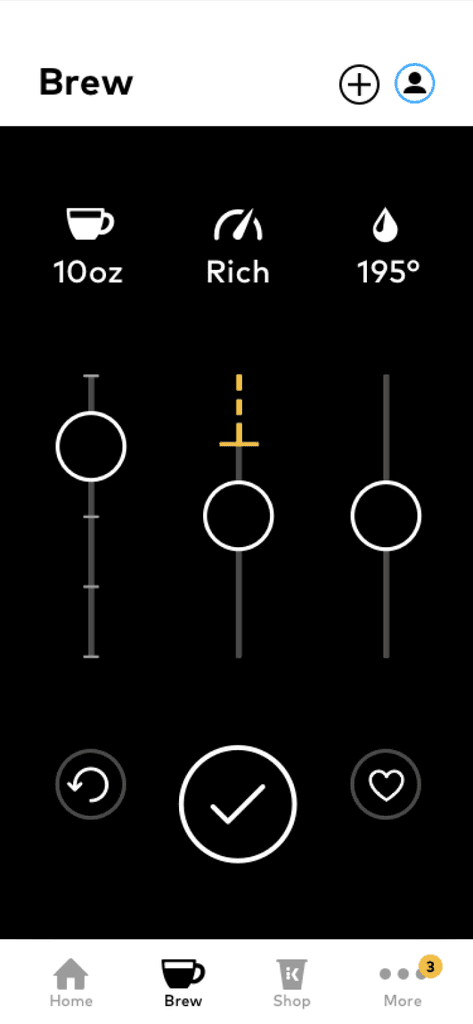
To prevent users from selecting incompatible brew settings, such as strength relative to cup size, we designed dynamic indicators to set expectations and provide guardrails.
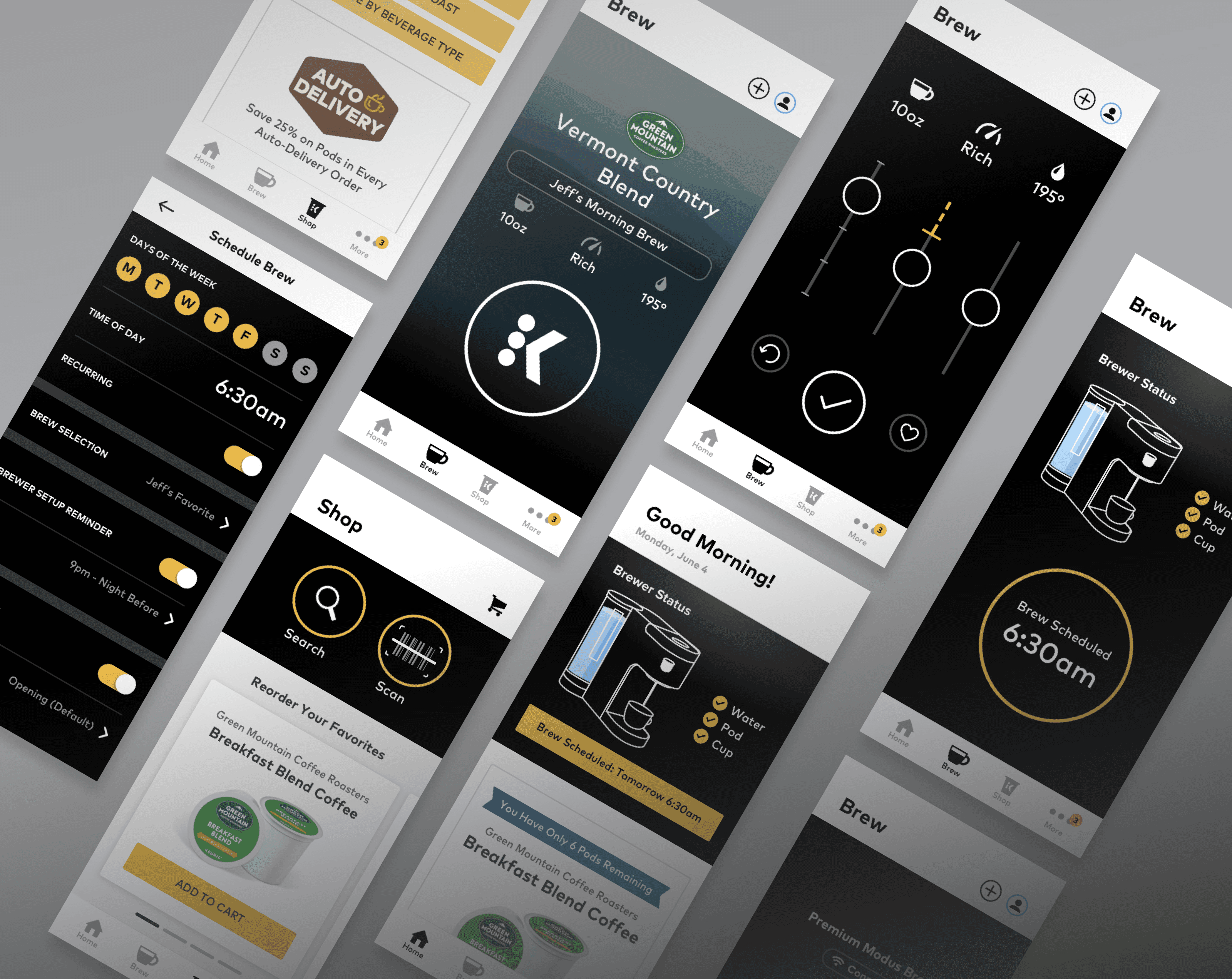
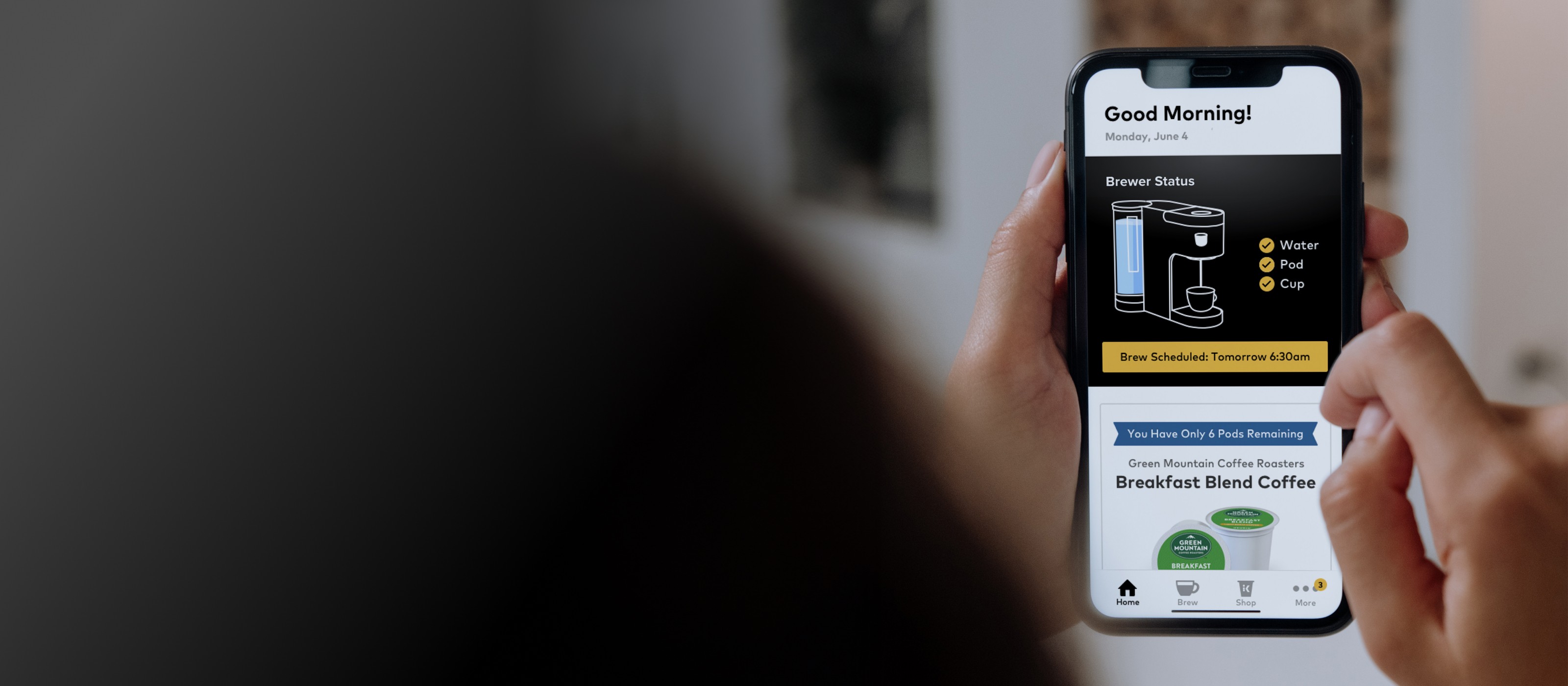
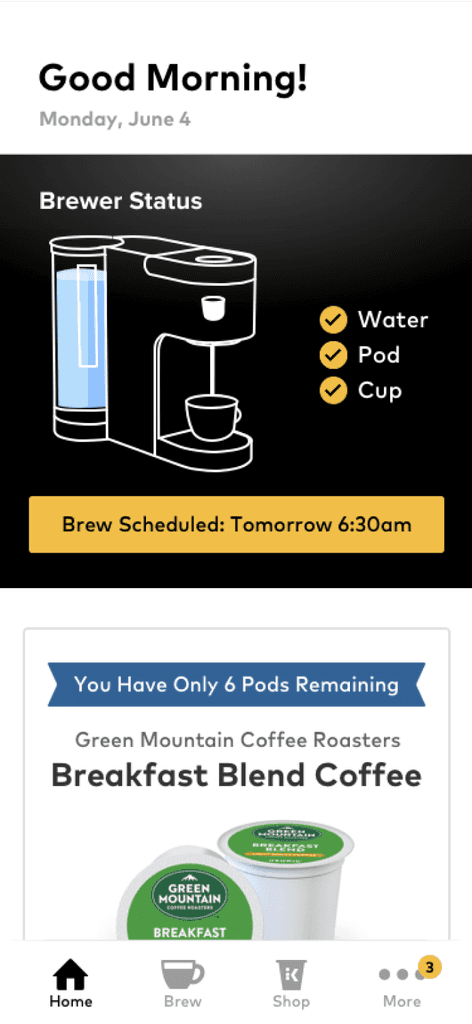
The brewer integrated with a companion mobile app, providing status and giving users remote control over their brewing process.
Users could schedule brews and adjust settings on the go.
Push notifications and in app alerts could let users know when pods were running low.
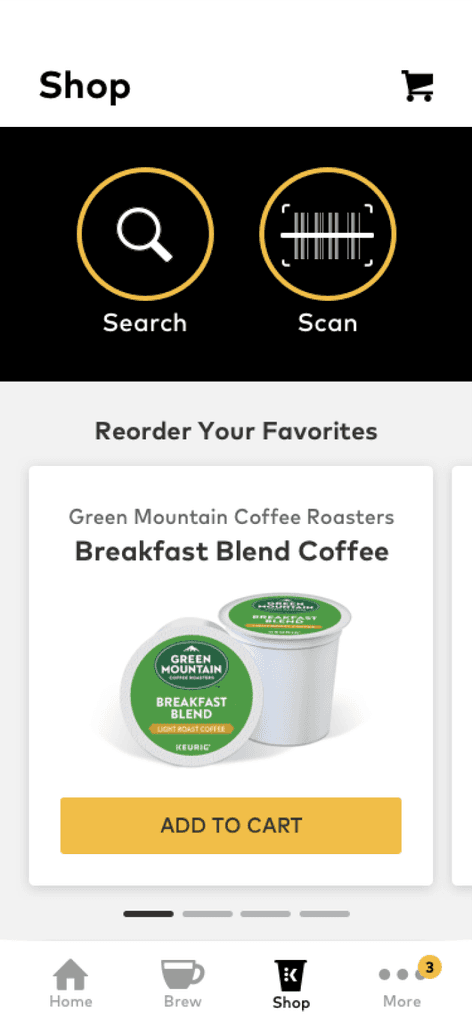
Shopping was a key business objective of the app experience. We tested using native features, like the camera, to help users quickly identify and restock the pods they needed.
Suggestions such as integrating with Amazon for one-click reordering were well received.
All of the brewer features were also available in the mobile app.
The app experience allowed users to fully personalize their favorite brew settings, including the ability to rename them for easier identification.